 KA220-ADU-000255284

Do you know the difference between critical whiteness and white supremacy? What is intersectionality? And what does institutional racism really mean? In our glossary, you find answers: we have selected 23 expressions related to racism and discrimination and explained them briefly. We took these definitions from the German game*, they help to understand different phenomena and underlying concepts behind racial behavour and structures. The glossary gives a deeper insight to racism and supports a critical reflection of own biases. It will be used in the 4-day blended learning train-the-trainer course to foster the trainers‘ competences. For the participants of game workshops, the glossary is a valuable additional material for further knowledge.
Another crucial instrument in the Participa City game are the debriefing methods. After playing the different scenarios, it is very important to reflect on the experiences made while playing discriminating situations. The role game helps to make racial behavour visible and tangible, with the debriefing methods, feelings and conclusions are shared and reflected. The participants can come up with new ideas for different actions of the persons in the scenarios. Experiences in the game situations can be related to personal experiences of the players. There are a number of very helpful methods for this reflection process, and all partners have already contributed to the long list. Out of this, we will at least select five methods that will be recommended to be used. Trainers can choose among the list and will find it in the trainer manual. We will present them soon here.
* Source: Eden Mengis, Ansgar Drücker (2019): Antidiskriminierung, Rassismuskritik und Diversität. 105 Reflexionskarten für die Praxis. Beltz Juventa. Own translation from German. https://www.beltz.de/fachmedien/sozialpaedagogik_soziale_arbeit/produkte/details/51146-antidiskriminierung-rassismuskritik-und-diversitaet.html

“Racism and education“ was the title of a conference on 7th November 2025 in Göttingen. Teachers, parents, pupils, multipliers, civil society and administration bodies came together to discuss racism at school and in the formal education sector from different perspectives. It was the very first time to reflect on this topic in Göttingen. The conference was organised by the new “Counseling Center against Racism in Education“.
The participants exchanged experiences and ideas in different workshop groups. They collected racial incidents and structures in school life and best practice examples to react on racism. Eventually, the participants proposed different measures and activities to work against racial structures and behaviours in the formal education sector. A great demand for teachers‘ trainings was identified to make them more conscious about racism. A school should develop an anti-racist school concept and school mission. Also, toolboxes about how to deal with racism and racial incidents were considered as a helpful step. Ifak participated in the conference and introduced “Participa City“ as a teachers‘ training. It was a very fruitful and interesting dialogue at this conference that underlined the high need for action in the education sector.

In all partner countries, surveys and interviews were conducted with standardised questionnaires to get insight in major aspects of racism and discrimination in the respective countries. The aim was to identify main areas of discrimination as well as competences needed to work against discrimination of ethnic and cultural minorities. The Transnational Analysis Report compares the results of France, Portugal, Sweden, Bulgaria and Germany and identifies common findings as well as differences. Although the data are based on a non-representative survey, they are in line with national statistics and show a lot similarities between the countries. The survey allowed also to collect critical incidents that will serve as a learning material in the European game version. Thanks to the Bulgarian partner Know&Can who were responsible for this work package. Have a look to the report that you can download here.

We are happy to share highlights from our second transnational partner meeting held on September 24-25, 2025, in the charming city of Lille, France. Hosted by our partners at GrDr, whose excellent organisation and warm hospitality made this event truly memorable, the meeting was a great success in advancing the Participa City project’s objectives.
A key focus of the meeting was the collaborative development of new engaging scenarios for our European Participa City Game. Partners shared rich insights and diverse ideas to design scenarios that reflect real challenges of discrimination and exclusion faced by ethnic and cultural minorities across Europe. This collaborative process was enriched by exploring intersectional perspectives, aiming to produce emotionally resonant and educational role-play experiences that encourage empathy and understanding among players.

Over the past months ifak has collected data through a survey and through conducted interviews as part of the Erasmus+ project "Participa City" together with the German partner blinc. The aim of our non-representative data collection was to assess where and how racism and discrimination at the national level occur and which obstacles still need to be overcome to foster the participation of ethnic and cultural minorities.
Through the analysis of the collected data, ifak identified the main groups affected by discrimination and racism and gained valuable insights into the sectors, stakeholders, and structural mechanisms that either enable or hinder their participation. Our findings have also revealed in which fields of life racism prevention activities are needed and which key competences are relevant to effectively address and prevent discriminatory behaviour. In addition, through our survey and the interviews critical incidents have been collected which will serve as the basis for the development of additional scenarios for the Participa City game and of acting recommendations.
The summary of our findings can be downloaded here.

In Lower Saxony a new network has been established which aims to strengthen anti-discrimination educational work in schools in the region and make it more visible. The “Netzwerk Diskriminierungskritische Schule Niedersachsen (NDS²) / Network of Schools Critical of Discrimination in Lower Saxony” wants to turn schools into places of respectful coexistence, which requires a clear stance against anti-democratic tendencies and the development of tools for actively confronting discrimination.
On April 22, 2025, Ifak participated in the kick-off event of NDS² in Hanover where around 100 people from the education sector and civil society came together to network and share ideas. The event was a great opportunity to present our Erasmus+ project "Participa City", which aims to foster inclusion and participation of ethnic and cultural minorities in Europe, and to get impulses for its further development. The participants joined different workshops and underlined the necessity for systemic approaches regarding discrimination in schools and shared best practices.
For Lower Saxony a variety of needs at different levels was identified. The participants would like to see clear guidelines from the Ministry of Education, such as teaching materials that are critical of discrimination and mandatory further training for the entire teaching staff. At school level, the expansion of multi-professional teams and long-term anti-discrimination programs across all year groups were called for to be able to better support affected students.
The kick-off event of NDS² was a highly interesting and fruitful meeting that brought together many people from different backgrounds who want to jointly provide impetus for anti-discriminatory school practices. For the future, the network intends to intensify its collaboration and to offer more and more information on its website: https://ndshochzwei.de/. Stay tuned to their website for updates, resources, and opportunities to get involved. Together, we’re building communities - where everyone belongs.
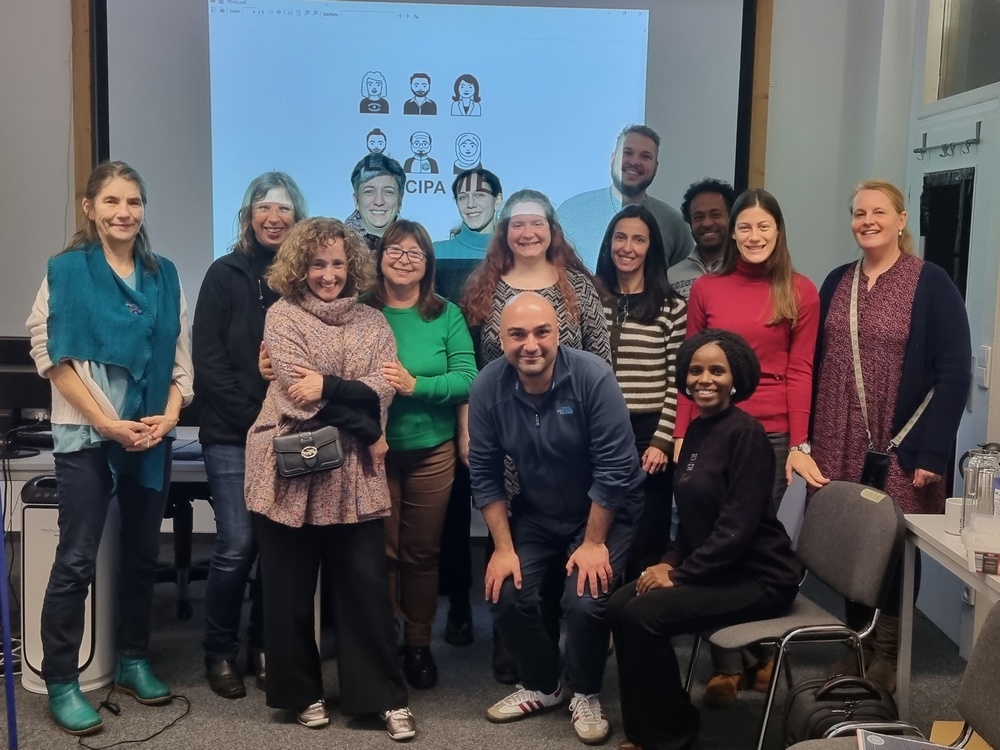
On the 23rd and 24th of January 2025, our network of experts from Bulgaria, France, Portugal, Sweden and Germany met in person for the first time in Göttingen to discuss the development of our multinational Participa City Erasmus+-project that aims to enhance inclusion and participation of ethnic and cultural minorities in Europe through gamified learning.
After we got to know each other better, we dived into the dynamics of the game and were able to gain valuable insights through the practical application of different role-play situations. By sharing personal reflections and engaging in discussions about the adaptation of the simulation game to the respective circumstances of racism prevention in the partner countries we created the basis for the further development of the game material.
We are looking forward to the time ahead in our project and are happy that we are able to collaborate with so many committed people from all over Europe. Our next steps are the conducting of a transnational analysis on racism prevention in Europe and developing a train-the-trainer course on the game’s methodology.

Discrimination happens in our allday-life as well as in institutions. People are excluded from equal participation for various reasons at school and authorities, in organisations and economy, in the neighbourhood and society. Discriminative structure are deeply anchored in our societies, have historical reasons and can only be reduced if people get conscious about these structures and get open to reflect their own perceptions and activities. The role game „Participa City“ invites people to think about their understanding of discrimination, to question it critically, to perceive discriminating behaviour in allday life and to look for different ways of action.
In allday life situations such as at the railway station, on the sport yard, on the playingground, or in the job center of the fictitious town „participa city“, the players take the roles of different persons with various backgrounds and from different origins. They meet in short playing situations and are concerned by discriminating statements or behaviour as well as actions. By reflecting these situations, the participants can come up with alternative options. The game adresses employees and decision makers in administrations, in job centers, education institutions and other organisations that act as multipliers into society. By acting and deciding more sensitive concerning discrimination, they can improve the chances for participation in society.
With the collaboration of six experienced partners from five countries, we are exploring the challenges in the prevention of racism and discrimination of ethnic and cultural minorities in Europe, identifying competence gaps of adult education providers and key persons in the field of racism prevention, educating Adult Education trainers and gate keepers on how to avoid racism and discrimination and providing the Participa City game in a European version as a gamified digital tool to contribute to the prevention of racism and discrimination.
These are the partners in our ERASMUS+-project:
Know & Can Ltd. / Bulgaria, Storytellme / Portugal, SwIdeas AB / Sweden, GRDR Migration – Citoyenneté – DéveloppementGRDR Migration – Citoyenneté – Développement / France and blinc eG / Germany.
On the basis of the German version of the game, we adapt in to the situation in our European partner countries.
We aim at preventing racism and discrimination of ethnic and cultural minorities in Europe, developing prevention strategies to reduce the negative consequences of discrimination, strengthening participation of ethnic and cultural minorities in European society, sensitising decision makers to avoid discriminatory structures and practices and fostering a diversity-friendly climate and inclusive society in Europe.
Follow our activities on the project website.
KA220-ADU-000255284